Thursday, 18 June 2009

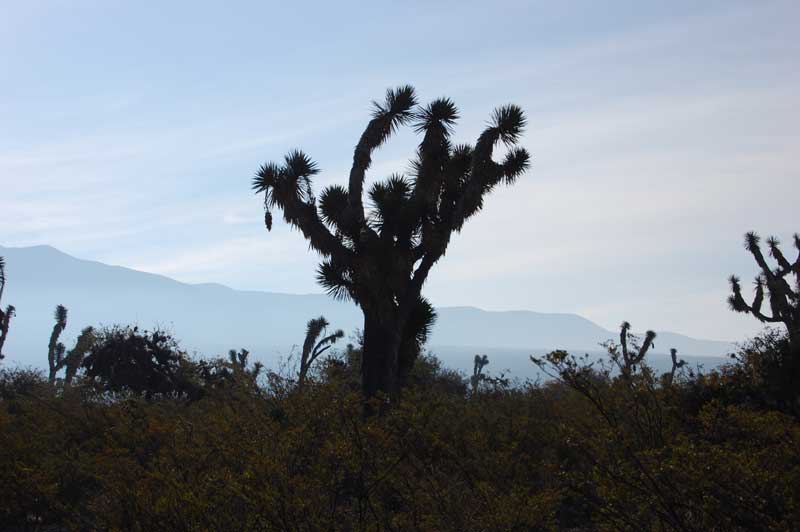
Old Yucca flowering at Monserrate


First flowers I have ever seen from this 6m tall plant. Has never flowered in last 20 odd years - suggests it might be a hybrid. Any ID?


I'm reliably informed that "according to literature only Yucca filifera and Yucca potosina have pendulous inflorescences". So any ideas?
Here is a link to a photo of Y. filifera

Sunday, 14 June 2009

Alternanthera brasiliana


Alternanthera brasiliana (L.) Kuntze
Revisio Generum Plantarum 2: 537. 1891.
BASIONYM: Gomphrena brasiliana Linnaeus 1756.
Synonyms:
Alternanthera dentata Stuchlik ex R. E. Fries, Ark. Bot. 16(13): 11. 1921, nom. illegit. BASIONYM: Gomphrena dentata Moench 1802, nom. illegit.; Gomphrena brasiliana Linnaeus 1756.
Caraxeron brasilianus (Linnaeus) Rafinesque, Fl. Tellur. 3: 38. 1837 ("1836").
Gomphrena brasiliana Linnaeus, Cent. Pl. 2: 13. 1756.
Gomphrena dentata Moench, Suppl. Meth. 273. 1802, nom. illegit.

Wednesday, 10 June 2009

Eranthemum pulchellum

Eranthemum, although standing in our ancientest tables, as a name to diiferent plants; must have been, hitherto, considered as a dead letter in all our modern ones, as attached to the tribe of plants it now titles: but perhaps, to none of the former more aptly could it have been applied; (especially this species, as the Greek word [blog does't do Greek!], a compound of the spring, and [Greek] to blossom, fairly indicates;) since the E. pulchellum first begins to flower in January, and continues to blossom till May. Linnaeus in treating this Genus, acknowledges to have seen but one imperfect specimen ; and from this circumstance, left the description of the seed-vessel, and seed, to be determined by future Botanists; as yet, that has not been accomplished, even by the indefatigable and accurate Schreber: indeed, had the character of the pointal been likewife omitted, it would have been as well; since, in place of one, the two unequal summits, (which might escape observation in a dried specimen, from their disproportion in length, and upright situation;) point out a stronger Generical distinction from Justicia, to which it much affines, than either, the regular shape of the limb of the blossom, or the situation of the chives. Our species is a native of the coast of Commandel, in the East Indies, and was first received in seeds from Dr. Roxburg, at the Royal gardens Kew, in the year 1796. It is a most desirable plant, for although it has hitherto been kept in the hot-house, we have no doubt from its flowering and thriving there, with so little care, in any situation ; but that it will soon be confidered as a proper inhabitant of the greenhouse. It is with the greatest ease, and certainty, increased by cuttings. Our drawing was made this month, from a plant in flower at the Hammersmith nursery.

Eranthemum pulchellum Andrews
Botanist's Repository, for new, and rare plants 2: , pl. 88. 1800.

Acanthaceae Juss.

Synonyms
Daedalacanthus nervosus (Vahl) T. Anderson
Eranthemum nervosum (Vahl) R. Br. ex Roem. & Schult.
Fittonia verschaffeltii var. pearsei G. Nicholson
Justicia nervosa Vahl
Pseuderanthemum pulchellum Merr.

Eranthemum pulchellum

Not a plant that was grown at Monserrate, but familiar to me in the gardens of Madeira. The reason I mention it is to call attention to a blog of Brazilian trees and plants run by Eugenio Melo
http://e-jardim.blogspot.com/. He gives information about the plants discovery and early cultivation - just the sort of information I am always looking for.

Since the blog is in Portuguese, here is a quick summary of what he has to say: The Acanthaceae provide some of the most beautiful flowering shrubs, they are fast growers, generally easy to grow and provide garden highlights to flower beds, walls and borders. Examples include the omnipresent (in Brazilian gardens!) Justicia brandegeana - Shrimp plant - and Pachystachys lutea - Yellow Shrimp (that I struggle to grow in Lisbon). These are both widly used by garden designers in Brazil for their vibrant colours. Indeed Eugenio feels that these tones of red and yellow are easy and common in hot climates. There is howvere a recurring difficulty to find flowers in a cooler tone, especially blue. Hence the post "Azul nos tropicos".

Eranthemum pulchellum was described in 1797 by Henry Charles Andrews, recently married with the daughter of a famous nurseryman in Hammersmith. Andrews published ten volumes of "The botanist's repository for new and rare plants". Palte 86 describes our plant. Seeds were sent by William Roxburgh from the coast of Coromandel. The plants were cultivated in the nursery and at Kew in hothouses.

The plant appreciates a soil with plenty of organic matter, can be grown in full sun or part shade, always well watered.

Um abraço Eugenio!

Yucca filifera


Photos by michaelmac500


Yucca filifera Chabaud
Revue Horticole 48: 432, f. 97. 1876.


One of the large tree Yuccas at Monserrate is showing an inflorescence. It is going to be a large hanging panicle which points to this species or possibly one of its hybrids.


Link to habitat photo by Paul Spracklin

QUINTA DE JOSE DIAS (COLARES)


PARTE DO JARDIM DA QUINTA DE JOSE DIAS (COLARES)Parte do jardim da quinta de José Dias (Colares) [Visual gráfico. - [Lisboa? : s.n., ca. 1850] ([Lisboa] : Lith. de A.C. de Lemos. - 1 gravura : litografia, p&b http://purl.pt/4033